On The Ball Pediatric
OT Designed Printable Visual Schedule for Autistic Kids, Kids with ADHD
OT Designed Printable Visual Schedule for Autistic Kids, Kids with ADHD
Share
Couldn't load pickup availability
Help Your Child Thrive with Structure & Predictability
Designed by a pediatric occupational therapist, this printable visual schedule transforms daily routines into a playful, empowering experience for neurodiverse children. Perfect for kids with autism, ADHD, anxiety, or those who have experienced trauma.
Why Visual Schedules Work
Visual schedules give children the gift of predictability and control. When kids can see what's coming next, transitions become easier, meltdowns decrease, and independence grows. This isn't just a chart, it's a tool that builds confidence and executive functioning skills in a gentle, supportive way.
Great For:
- Children on the autism spectrum who thrive with visual supports
- Kids with ADHD who need help with time management and task sequencing
- Children experiencing anxiety who feel calmer knowing what to expect
- Trauma-informed care - giving children a sense of safety and control
- Building and accommodating for executive functioning skills (planning, organizing, transitioning)
- Morning routines, after-school schedules, bedtime routines, and weekend activities
What Makes This Different
Created by an experienced pediatric occupational therapist who understands sensory needs, developmental stages, and the importance of making tools feel fun, not clinical. This schedule uses engaging visuals and a playful design that kids actually want to use.
What You'll Receive
Instant digital download - print at home, at On The Ball, or at your local print shop. Customizable and reusable for different routines throughout the day.
-
“My Routine” Board (1–5 steps):
A simple layout where children move a visual marker from To Do → All Done for each step. Hands represent the sign language equivalent in ASL. -
Action Cards:
Over 30 illustrated cards covering daily activities, self-care, movement, sensory needs, school tasks, and calming strategies. -
Sensory & Regulation Cards:
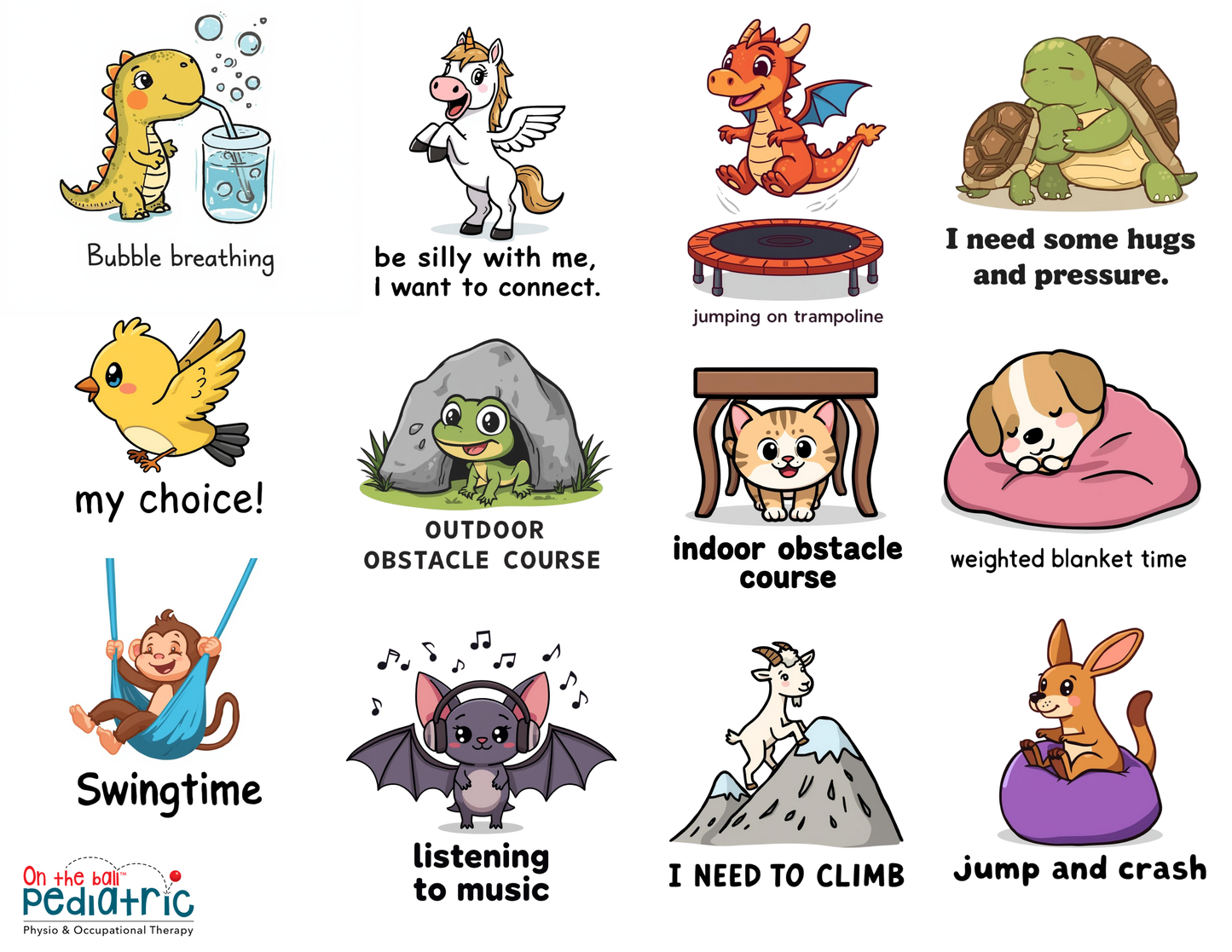
Optional cards for emotional and sensory, body based regulation (e.g., “bubble breathing,” “jump and crash,” “weighted blanket time,” “I need to climb,” etc.)
Benefits Your Child Can Experience
- Smoother transitions between activities
- Reduced anxiety about what's happening next
- Increased independence and self-confidence
- Improved participation in daily routines
- Development of time awareness and executive functioning
- A sense of control and empowerment in their day
Designed with love by On The Ball Pediatric Therapy - Supporting families with evidence-based, child-friendly therapeutic tools. Designed by our very own occupational therapists at On The Ball.
General Instructions:
How to Use the Visual Schedule
1. Prepare the Materials
-
Print and cut the routine board and action cards.
-
Laminate if desired for durability.
-
Add Velcro/sticky tac/other adhesive so cards can be moved easily.
-
Choose 1–5 action cards that match the tasks your child needs to complete.
-
Place each card in order under the numbers 1–5 in the “To Do” column.
-
Keep additional action cards nearby for quick swaps based on the day’s needs.
Review the steps together before starting the routine.
3. Complete the Routine Together-
As your child completes a task, invite them to move the card from “To Do” → “All Done.”
-
Celebrate each success! The physical act of moving a card provides a clear, tactile, transition segway and builds motivation while helping your child know what to expect.
-
Start by guiding your child step-by-step.
-
You can gradually reduce support if they learn to check the board on their own.
-
Use sensory cards or calming options to support regulation when needed.
-
Swap in sensory cards, preferred activities, or calming strategies when routines feel overwhelming.
-
Keep routines short, clear, and achievable.
Note: This is a digital download. No physical product will be shipped.